Three Tax Buckets
Understanding how different investment accounts and assets are taxed is crucial for effective financial planning.
Here’s a comprehensive breakdown of the three main tax categories and their key characteristics:
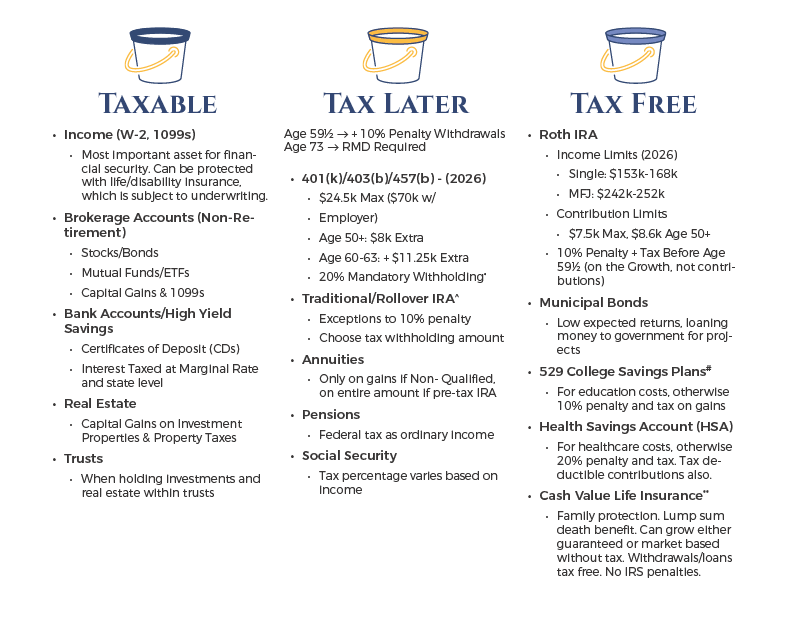
2026 Limits. Subject to change without notice. This material is for general informational purposes only and is not tax advice.
Taxable, tax deferred, and tax-free refer to the tax treatment of any gains or growth from these assets. Redistribution of assets may cause tax consequences. Also, tax-free assets have already been subject to income taxation before being put into an account or product. Certain interest, although exempt from federal income tax, may still be reportable to the IRS and, in certain circumstances, may be subject to the alternative minimum tax (AMT). Note that a 20% federal income tax withholding will apply to most lump-sum taxable distributions from qualified accounts. that are paid to you.
^ When considering rolling over the proceeds from your retirement plan to another tax-qualified vehicle, note that you have options, including leaving the funds in your existing plan, or rolling it over to a new employer’s plan. Depending on the option you select, there may be fees, expenses, and taxes upon withdrawal.
# There are fees, charges and tax ramifications associated with a 529 plan, and the underlying investment options are subject to market risk and will fluctuate in value. Be sure to read the full prospectus of the 529 plan you decide to purchase.
* Loans against your policy accrue interest and decrease the death benefit and available cash surrender value by the amount of the outstanding loan and interest. Accessing cash value will reduce the available cash surrender value and death benefit

Where We Do Business