Solo 401(k) Plans
A Strategic Retirement & Tax-Saving Plan for Self-Employed Entrepreneurs
Running your own business comes with incredible freedom. You choose your schedule, you shape your work, and you control your income. But one area many entrepreneurs overlook is their own benefits—especially retirement planning.
Health insurance, life insurance, and employee benefits can get expensive for a small business. You may not need every benefit, but one thing you can’t afford to ignore is your long-term retirement strategy.
When you're an S-Corp owner or a self-employed professional without full-time employees, the Solo 401(k) stands out as the most efficient, highest-impact retirement plan available. It allows unmatched contribution limits, powerful tax advantages, and complete control over how and when you save.
Whether you’re a consultant, tech professional, medical provider, or small business owner, a Solo 401(k) can help you reduce taxes today and build serious wealth for tomorrow.
What is a Solo 401(k)?
A Solo 401(k)—sometimes referred to as an Individual 401(k), Solo(k), Self Employed 401(k), or Owner-Only 401(k)—is a retirement plan designed for businesses with no employees other than the owner and (if applicable) the owner’s spouse.
Businesses that typically qualify include:
Sole proprietors with no employees
Single-owner LLCs
Partnerships with only partners (and spouses)
One-owner corporations where only the owner or owner and spouse earn W-2 wages
If you have no full-time employees other than yourself and your spouse, you can qualify.
A Solo 401(k) works just like a traditional employer 401(k)—but with a major advantage:
you can contribute as both the employee and the employer.
This structure allows far greater flexibility and higher annual savings than IRAs, SIMPLE IRAs, or SEP IRAs.
Eligibility Requirements
To set up a Solo 401(k), you must:
Have earned income from self-employment
Have no full-time employees (other than your spouse)
Have an Employer Identification Number (EIN)
Be able to support your planned contribution with W-2 wages (S-Corp Owners) or self-employment income (Sole Proprietors)
There are no age limits and no minimum income, as long as your earnings can support the contribution you want to make.
How Solo 401(k) Contributions Work for S-Corp Owners
A Solo(k) contribution has two parts—both of which you control.
1. Employee Elective Deferrals
You may contribute:
$23,500 for 2025
$31,000 if age 50 or older
These can be Traditional (pre-tax) or Roth.
S-Corp rules:
Deferrals must be elected before December 31
Contributions must come from W-2 wages, not distributions
Deposits generally follow your payroll cycle
This gives S-Corp owners control over income planning and tax strategy.
2. Employer Profit-Sharing Contributions (Your S-Corp)
Your business can contribute up to 25% of your W-2 compensation.
Benefits include:
Fully tax-deductible to the company
Not subject to Social Security & Medicare tax
Can be funded as late as the corporate tax deadline, including extensions (March 15 or September 15)
For many S-Corp owners, this is where the biggest tax savings occur.
Combined Maximum (2025)
Up to $70,000 total contributions
Up to $77,500 for age 50+
Realistic S-Corp Example
W-2 salary: $150,000
Employee deferral: $23,500
Employer profit sharing (25% of salary): $37,500
Total: $61,000
If age 50+:
$61,000 + $7,500 = $68,500
If compensation is structured specifically to maximize IRS limits:
$70,000, or $77,500 for age 50+
Why Solo 401(k)s Work Well for Small Business Owners
• Higher Contribution Limits Than Any IRA
(SEP and SIMPLE cannot match combined employee + employer savings.)
• Major Tax Deductions
Pre-tax deferrals lower your personal taxable income.
Employer contributions reduce business income.
• Roth Option for Tax-Free Growth
No income limits for Roth contributions inside a Solo 401(k).
• Outstanding Flexibility
Employee contributions can be ongoing through payroll.
Employer contributions can wait until tax-filing—perfect for year-end planning.
• Spousal Participation
If your spouse earns W-2 wages from your S-Corp, they can double the family’s retirement savings.
2025 Comparison: Solo(k) vs SEP IRA vs SIMPLE IRA
What this means:
At every income level, Solo 401(k)s allow more aggressive savings and better tax planning.
Funding Options and Year-End Strategy Benefits
Many self-employed professionals don’t have consistent monthly cash flow. A Solo 401(k) offers flexibility that makes it easier to contribute when it makes strategic sense.
Lump-sum funding
Sole proprietors and partnerships can often fund employer contributions as a single deposit before the business tax-filing deadline. Employee deferrals require a signed election before year-end but can be deposited later, depending on business type.
This flexibility gives business owners and their CPAs time to calculate the most efficient year-end contribution to reduce taxes.
Automatic contributions
Some plan providers also offer automatic payroll contributions based on your pay frequency—weekly, bi-weekly, or monthly—making ongoing savings easier to maintain.
Major Tax Advantages
A Solo 401(k) offers multiple layers of tax benefits:
Pre-tax contributions lower taxable income
Roth contributions grow tax-free
Employer profit-sharing contributions are tax-deductible
All investment growth inside the plan is tax-deferred or tax-free
For many business owners, the combination of tax deductions and high contribution limits makes the Solo 401(k) one of the most powerful wealth-building tools available.
Who This Is Perfect For
S-Corporation owners
Independent consultants & contractors
Tech professionals (including H-1B and green card holders)
Physicians, dentists, CRNAs, pharmacists
South Asian business owners
High-earning solopreneurs
Anyone wanting to reduce taxes and invest more each year
Ready to maximize your retirement savings and tax deductions?
We can help!

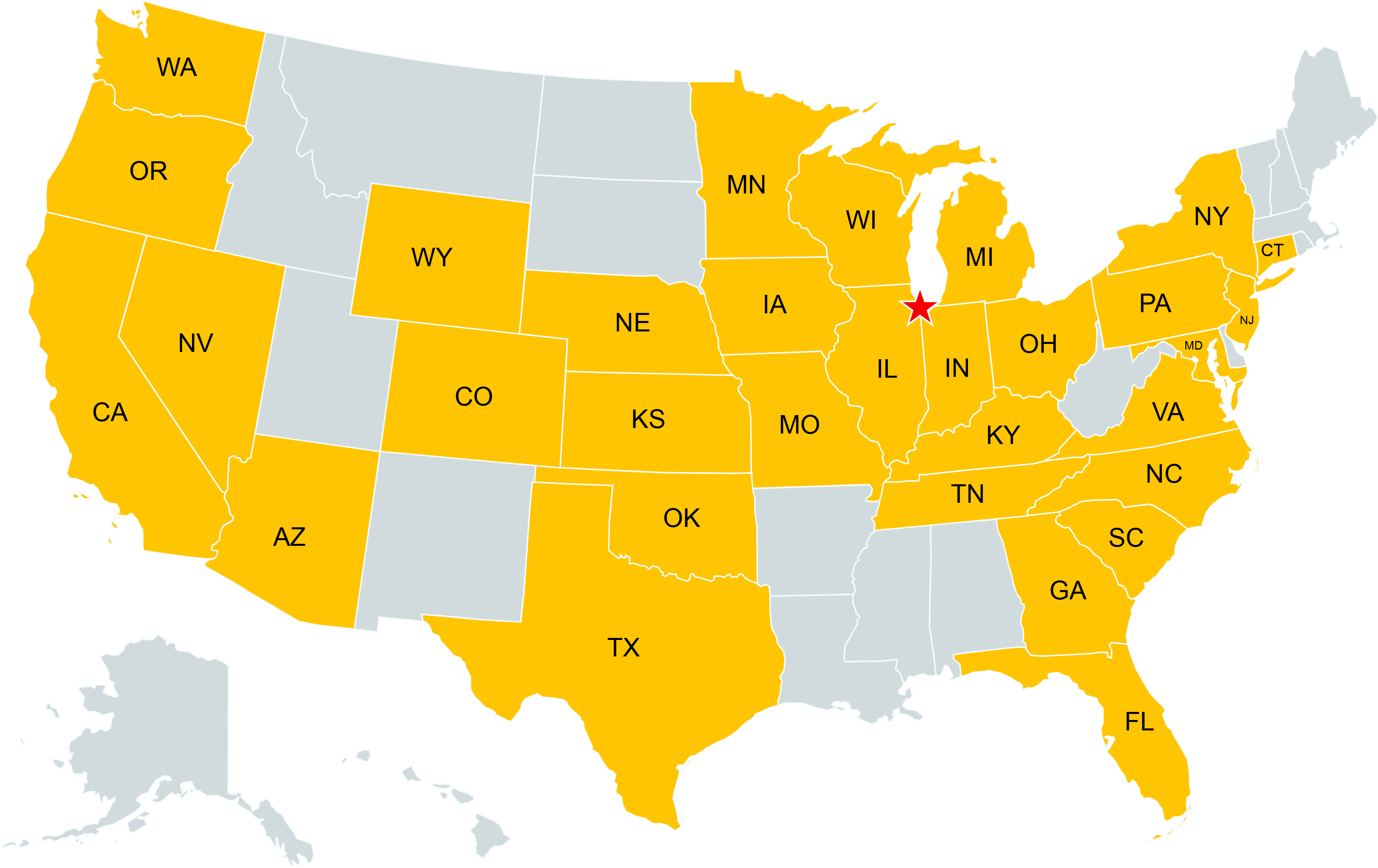
Where We Do Business